
Breast augmentation is one of the most performed plastic surgery procedures in the country, and like any surgery, it carries real risks worth understanding before you commit. When performed by a skilled, board-certified surgeon in an accredited setting, the vast majority of patients move through the process without serious complications. But an informed patient is always better positioned to heal well and set realistic expectations.
At Micallef Plastic Surgery, double board-certified plastic and reconstructive surgeon Dr. Christopher J. Micallef approaches every breast augmentation with the precision and patient-first philosophy he developed over 15 years as a Special Operations physician in the U.S. Air Force. This blog walks San Antonio patients through the most common risks and what his practice does to minimize them.
What Are the Most Common Risks?
Most complications associated with breast augmentation are manageable, particularly when caught early. It is reassuring to note that extensive, long-term clinical research, including massive, multi-year core studies tracked by the FDA, continually confirms that modern breast implants have a reasonable assurance of safety and are not linked to an increased risk of breast cancer or reproductive issues. Furthermore, patient satisfaction data remains overwhelmingly positive, with up to 97% of primary augmentation patients reporting high levels of satisfaction with their final results. Still, patients should go into surgery understanding the full picture:
- Capsular contracture: Scar tissue forms around the implant and tightens, potentially distorting the shape or causing discomfort
- Implant rupture or deflation: Silicone ruptures are often silent and may require imaging to detect; saline ruptures are immediately apparent as the implant deflates
- Implant malposition: The implant shifts from its intended placement, affecting symmetry and appearance
- Changes in sensation: Nipple and breast sensitivity may shift temporarily after surgery, and in some cases, changes can be longer-term
- Infection: Rare but possible; typically addressed with antibiotics or, when necessary, implant removal
- Scarring: Incision placement and technique influence how visible scars are over time
- Anesthesia-related risks: Standard surgical risks that apply to any procedure performed under general anesthesia
Some of these are uncommon. Others, like swelling and temporary discomfort, are simply part of healing.
How Preservation Breast Augmentation Reduces Risk
Technique matters. Dr. Micallef performs Preservation Breast Augmentation, an approach that keeps the breast's internal anatomy as intact as possible. By utilizing specialized, blunt-tipped instruments and an inflatable balloon to gently push tissue aside rather than cutting or cauterizing it, Dr. Micallef protects the native blood supply, chest muscles, and critical nerve pathways. Where traditional augmentation can disrupt ligaments, skin attachments, and connective tissue, this method preserves the breast's natural structure throughout.
The practical benefits include less postoperative swelling, a lower risk of malposition and rippling, and results that maintain a softer, more anatomical shape over time.
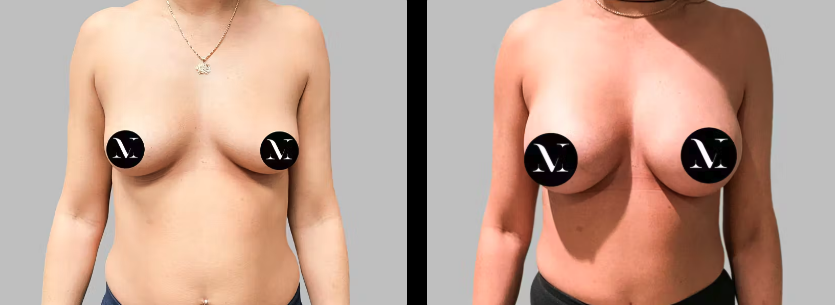
*Real Patient Results: Breast Augmentation by Dr. Micallef
What to Expect During Recovery
Swelling, tightness, and soreness in the first week are normal and manageable with prescribed medication. Most patients return to light daily activity within about a week. Strenuous exercise and heavy lifting should be avoided for several weeks to allow proper healing, and final results generally settle within a few months as swelling resolves.
Dr. Micallef and the team stay closely involved throughout recovery, ensuring concerns are addressed well before they become complications.
Schedule a Consultation with Dr. Micallef in San Antonio
Understanding the risks is the first step. The next step is choosing a surgeon with the training, technique, and follow-up care to handle them. Dr. Micallef's qualifications and hands-on involvement throughout recovery set a standard of care that goes well beyond the operating room. To find out whether breast augmentation is right for you, schedule a consultation with Dr. Micallef today.